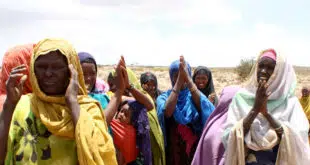
Community-Led Total Sanitation (CLTS) is quickly taking the international development / global aid world by storm. According to the Institute of Development Studies it is now being used “in more than 50 countries, of which at least 15 have made CLTS official national policy”. Traditional sanitation programs usually distribute free or subsidised concrete …
Read More »Blog
Sending Email Newsletters with MailChimp
Say you want to send out a regular email newsletter or some ad hoc email updates to a bunch of people. It could be emails to people that have made individual donations to your project. It could be an email campaign promoting family planning services in a target country. It …
Read More »Using Tableau Public to visualise data
Download Tableau Public Do you ever wish you could send your donor a cool interactive map showing the results of your project, rather than just a boring report or PowerPoint presentation? Well, now you can. Tableau Public is a free tool that allows anyone to create interactive charts and maps …
Read More »Simple, quick and easy – Tiny Tools for impact assessment
Download Tiny Tools Many international development / aid programs try to directly improve people’s lives through activities such as building boreholes, running agricultural training programs, or setting up youth programs. When evaluating these types of programs it can be difficult to know if community members really believe that their situation …
Read More »Free online courses for international development professionals
It used to be that if you were working in international development and wanted to improve your skills you only had two choices. Either spend a lot of time and money doing a masters degree, or try to teach yourself using whatever old textbooks you could find lying around. These …
Read More »Online-based survey software… 5 pointers to look out for
Surveys are a pretty common activity in international development programs. It is becoming increasingly easy to undertake online-based surveys (as opposed to paper-based), and there are definitely some benefits to be recognised. It used to be that undertaking online-based surveys was a major production, requiring co-opting a web nerd in …
Read More »The Parenting Map for monitoring orphans and vulnerable children
Working with orphans and vulnerable children can be extremely challenging in developing countries. There are usually only a small number of staff available to monitor the children’s well-being, and often those staff have limited training and experience. As a result, many programs deliver a standard set of interventions for every …
Read More »The Batteries Methodology for measuring quality of life
Improving people’s quality of life is the ultimate goal for many international development programs, even though it might not be stated as such. Having a high quality of life just means having a full and happy life. For example, programs to increase people’s income or health only do this so those …
Read More »Using the ‘Most Significant Change’ (MSC) Technique to measure the intangible
In development, it is essential to measure if programs are having the desired impact. However, intangible goals such as ’empowerment’, ‘leadership skills’ and ‘confidence’ are difficult to measure with normal quantitative monitoring tools. This is particularly true in social change programs where improvements in attitudes, behaviour and beliefs take place …
Read More »Doing Focus Groups – Book Review
I was recently involved in a frustrating debate with a World Bank development economist where qualitative research was dismissed as ‘not reliable and anecdotal’. Thankfully, this view now appears to be in the minority, as international NGOs and UN agencies are increasingly recognising and utilising qualitative research methods such as …
Read More »